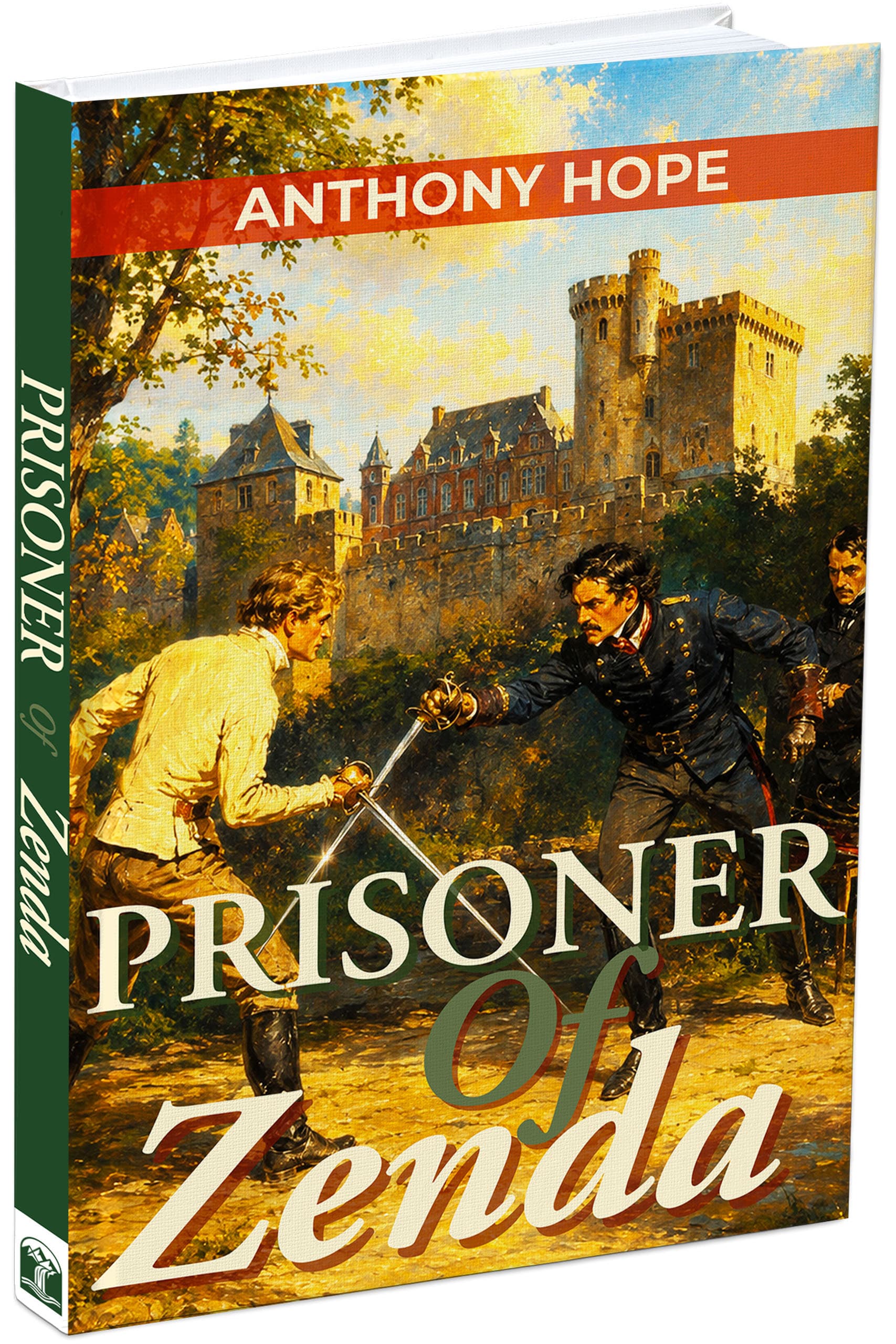
The crown fits. That’s the problem.
Rudolf Rassendyll is an idle English gentleman with nothing better to do than travel to Ruritania and watch a coronation that has nothing to do with him … or so he believes. As it turns out, he shares a name, a face, and the unmistakable red Elphberg hair with a distant cousin he’s never met: the very man about to be crowned King Rudolf V. The night before the coronation, King Rudolf is drugged unconscious on his own half-brother Michael’s orders, and locked away at Zenda while Michael reaches for the throne.
With the coronation hours away and no king able to attend, Colonel Sapt and Fritz von Tarlenheim ask Rassendyll to stand in. Rassendyll takes the crown, the title, and even the king’s betrothed, Princess Flavia, who begins to fall for a man she thought she’d known all her whole life. The deception holds through ceremony and court, but Michael will not easily give up his brother’s throne. With a henchman on his trail, Rassendyll must free the real king from Zenda’s walls without revealing his own identity.
The Prisoner of Zenda gave the world the swashbuckling romance of a fictional European kingdom now simply called “Ruritania.” Beneath its swordplay and disguise sits the sharper dilemma of what Rassendyll owes—both to a crown that was never his, and to a woman whose love depends on a lie she cannot see.
“You should always trust a man … just as far as you must.”