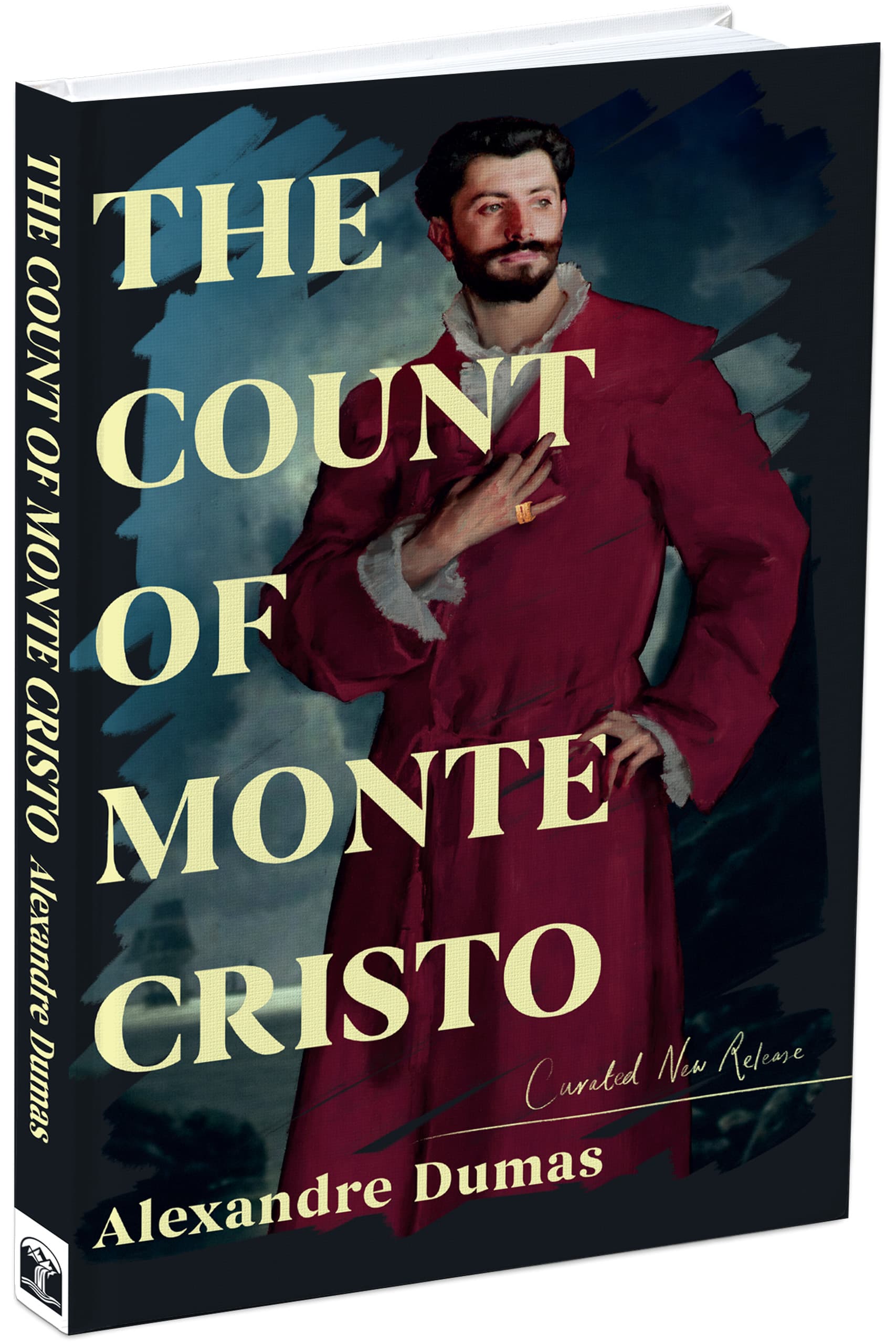
The Count of Monte Cristo
- Written By Alexandre Dumas
The Count of Monte Cristo
- Alexandre Dumas
Betrayed at 20. Reborn as vengeance itself.
The year is 1815. Edmond Dantès is a young sailor in Marseille on the verge of everything he wants: command of his own ship, marriage to the woman he loves, and a future built on hard work and plain dealing. Three men who envy him decide he deserves none of it. A forged letter and invented charge lead to Dantès’s wedding-day arrest and imprisonment, with no trial, on the island fortress of the Château d’If.
As the years pass, Dantès finds an unlikely mentor in a fellow prisoner. A scholar who teaches him history, languages, and science also tells him of a fortune hidden on the island of Monte Cristo. When escape finally comes, Dantès emerges a different man: wealthy beyond calculation, patient beyond ordinary endurance, and utterly transformed. He returns to the world as the Count of Monte Cristo, and the men who aimed to destroy him have no idea what is coming next.
Alexandre Dumas built a thousand-page epic of retribution that never once loses its grip. The novel asks what justice costs the person who administers it, and whether a man remade by suffering can ever fully return to who he was before.
“… all human wisdom is contained in these two words: ‘Wait and hope.”
About the Author
- Alexandre Dumas
Alexandre Dumas was born in 1802 in Villers-Cotterêts, France, the grandson of an enslaved woman from Saint-Domingue and a French nobleman. His father, Thomas-Alexandre Dumas, rose to become one of Napoleon’s most celebrated generals before falling from favor, a story of triumph and betrayal that would echo through his son’s fiction. Dumas began his career writing for the Paris stage, where his historical dramas made him a sensation, before turning to the serialized novels that would define his legacy.
Working at extraordinary speed and often with collaborators, Dumas produced an immense body of work, including The Three Musketeers and its sequels alongside The Count of Monte Cristo, both first published in serial form in 1844. He wrote for a mass audience and never apologized for it, favoring momentum and incident over the literary fashions of his day.
Dumas died in 1870, having spent much of his considerable fortune as freely as he made it. Monte Cristo has become a template borrowed by writers across genres and generations, from popular fiction to prestige television, wherever a story needs a man who vanishes and returns transformed.