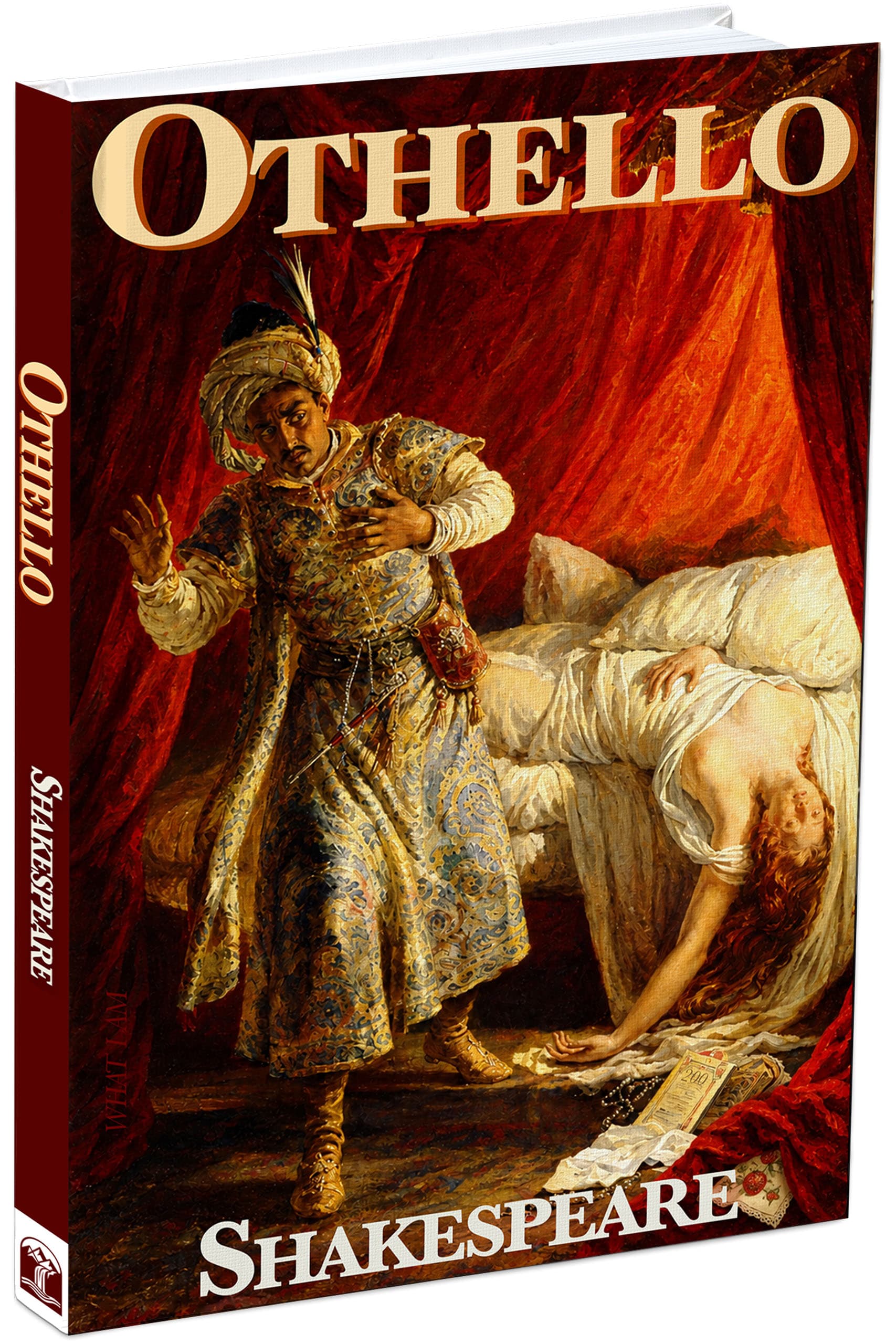
He won every war but the one waged inside his own house.
Othello spent his life earning what never should have been his: command of Venice’s armies, the loyalty of its soldiers, and now, secretly, the love of Desdemona, a senator’s daughter who chose him over the suitor her father prefers. Their marriage defies a city that both depends on and distrusts him. When war calls him to Cyprus, Desdemona insists on going with him, and for a brief period, victory and happiness abound.
Iago has other plans. Passed over for a promotion, he takes bitter aim on Othello using nothing but words, an idle rumor, a dropped handkerchief, and the general’s own fears. Othello, so fearless and certain on the battlefield, has no defense against doubts planted by a man he trusts completely. Innocent friendliness now lands like deceit. A misplaced token becomes proof. The war Othello came to Cyprus to fight ends triumphantly almost before it starts. The one Iago wages against the army general is only beginning.
No other tragedy of Shakespeare’s so closely tracks a single mind unraveling in real time. Othello examines jealousy at the range of a whisper: the portrait of a man who wins every battle he can see, only to be undone by one fought in shadows.
“O, beware, my lord, of jealousy;
It is the green-eyed monster which doth mock
The meat it feeds on.”