Eric Rücker Eddison was born in 1882 in Adel, Yorkshire, and educated at Eton and Trinity College, Oxford. In 1906, he joined the Board of Trade and spent more than three decades earning honors for distinguished service in civil and foreign affairs, a career built on discretion and competence that, by his own account, left little outward sign of the imagination working underneath it.
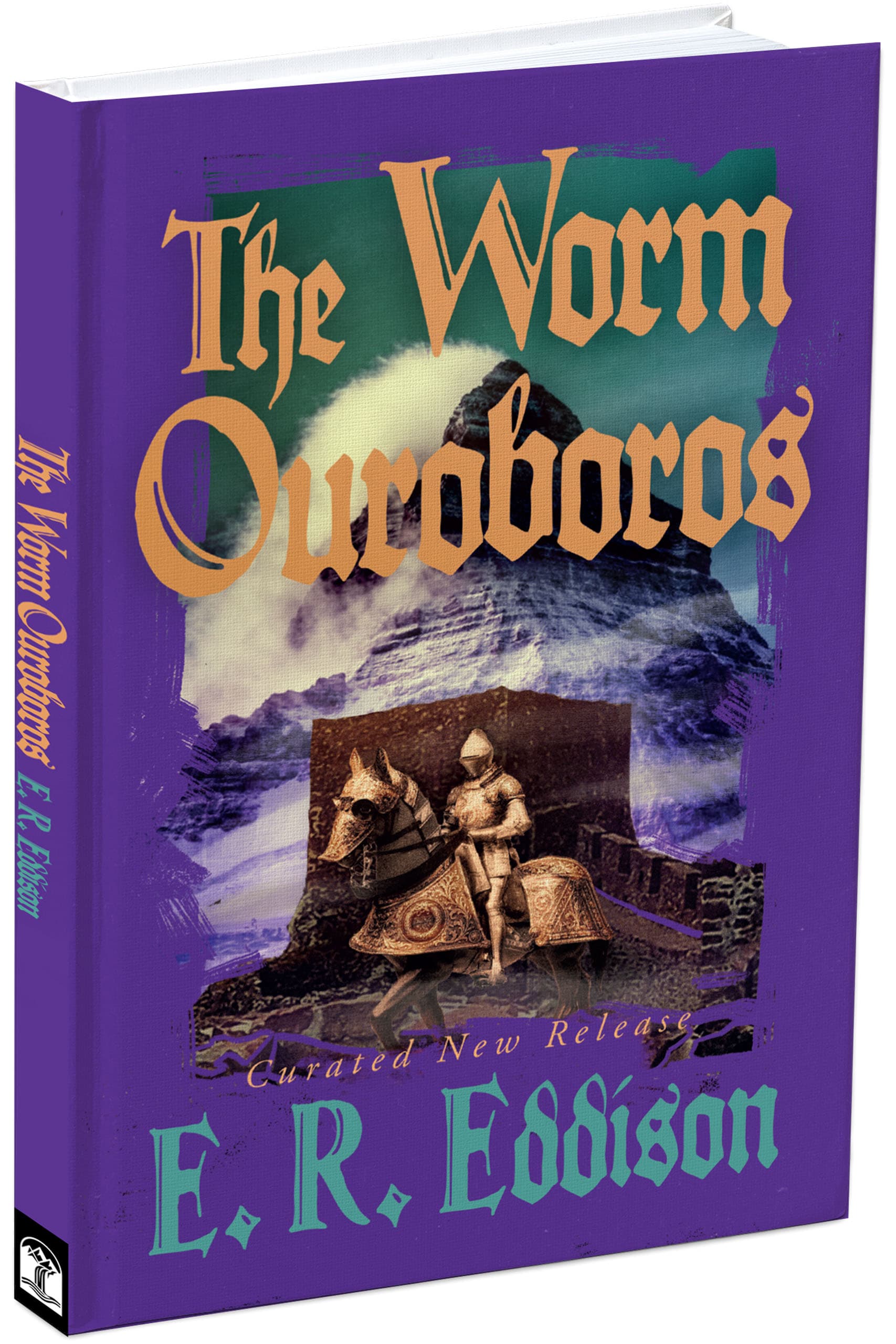
That imagination surfaced in 1922 with The Worm Ouroboros, written in his spare hours and steeped in the Icelandic sagas and Jacobean drama he had studied since boyhood. A devoted scholar of Old Norse, Eddison later produced his own translation of Egil’s Saga, a medieval classic set in the Viking age, whose archaic, muscular language shaped Ellison’s invented world of Demonland and Witchland. He returned to that world in the Zimiamvian trilogy, beginning with Mistress of Mistresses in 1935 and left unfinished at his death in 1945 (with the final, incomplete volume, The Mezentian Gate, published posthumously in 1958).
Eddison’s fiction found an appreciative audience among the Inklings, an informal literary discussion group of academics and writers who met at the University of Oxford. Among them, J.R.R. Tolkien called Eddison “the greatest and most convincing writer of invented worlds” he had ever read. Eddison died in 1945, leaving The Worm Ouroboros as one of the foundational texts of modern fantasy.